
Children’s Digital X-Rays – Casper
Quick, Painless, and Safe Imaging
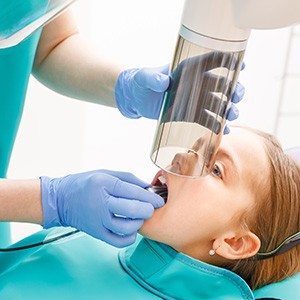
At Casper Children’s Dental Clinic, we want all growing children’s smiles to throve. We are proud to offer the latest dental technology, including digital dental X-rays, to help us monitor your child’s developing mouth and teeth as well as detect and diagnose oral health issues as early as possible. Modern digital dental X-rays are more comfortable and safer than ever before. Here’s how they work and what you can expect!
What Are Digital X-Rays?

Digital dental X-rays use electronic sensors to capture images. Instead of film, a small sensor is placed in the mouth to record detailed images of the teeth, jaw, and surrounding structures. These images are then transmitted to a computer. On the computer, they can be viewed, enlarged, and adjusted by your pediatric dentist for better clarity.
How Are Digital X-Rays Taken?

For most children, it is recommended that bitewing X-rays are taken every twelve months. This image shows all of the teeth in the back of the mouth. Once your child’s posterior permanent teeth begin to erupt (usually around the age of 9), a full mouth X-ray called a “panoramic” is recommended. This helps your child’s dentist to see how your child’s smile develops.
After placing a lead apron on your child, they will be instructed to gently bite down with their front teeth onto a “bite stick” that helps line them up. They will need to sit still for a few seconds. This process is quick, easy, and gives a lot of essential information to their dentist.
The Benefits of Digital X-Rays

Digital X-rays offer numerous advantages compared to the traditional method. Here are just some of them.
- High-Quality Images: Digital X-rays produce higher quality images to help their dentist diagnose issues and create more accurate treatment plans.
- Quick: Because these images are captured digitally, the whole process is quick and convenient.
- Less Invasive: Digital dental X-rays are less invasive than the traditional method. This is especially helpful for those who have sensitive teeth or a strong gag reflex.
- Easy Sharing: Digital radiographs are easily shared with other dentists and specialists.
- Environmentally Friendly: Digital dental radiographs don’t require chemical processing and don’t produce hazardous waste.
- Less Radiation Exposure: The digital sensors require 80-90% less radiation than film.